
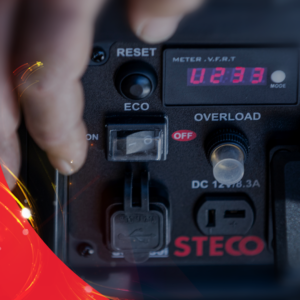
When backup power becomes a daily operational requirement, fuel consumption quickly becomes one of your most significant operating costs. Many operators assume that as long as a generator is running smoothly, it is operating efficiently. However, inflated operating costs often have less to do with the machine itself and more to do with how it is being used on-site.
Whether you’re powering heavy-duty equipment on a construction site or keeping a workshop operational during load-shedding, efficiency directly impacts your bottom line. At Steco, we engineer our generators for maximum reliability and power output, but pairing quality equipment with smart operating habits is the key to unlocking true fuel efficiency and getting the most from your investment.
Whether you’re using a compact inverter generator for home backup, a quiet portable unit for outdoor use, or a heavy-duty petrol generator for demanding worksites, the same efficiency principles apply across the entire Steco generator range.
Here’s our expert playbook on how to reduce generator fuel consumption without compromising on safety or performance.
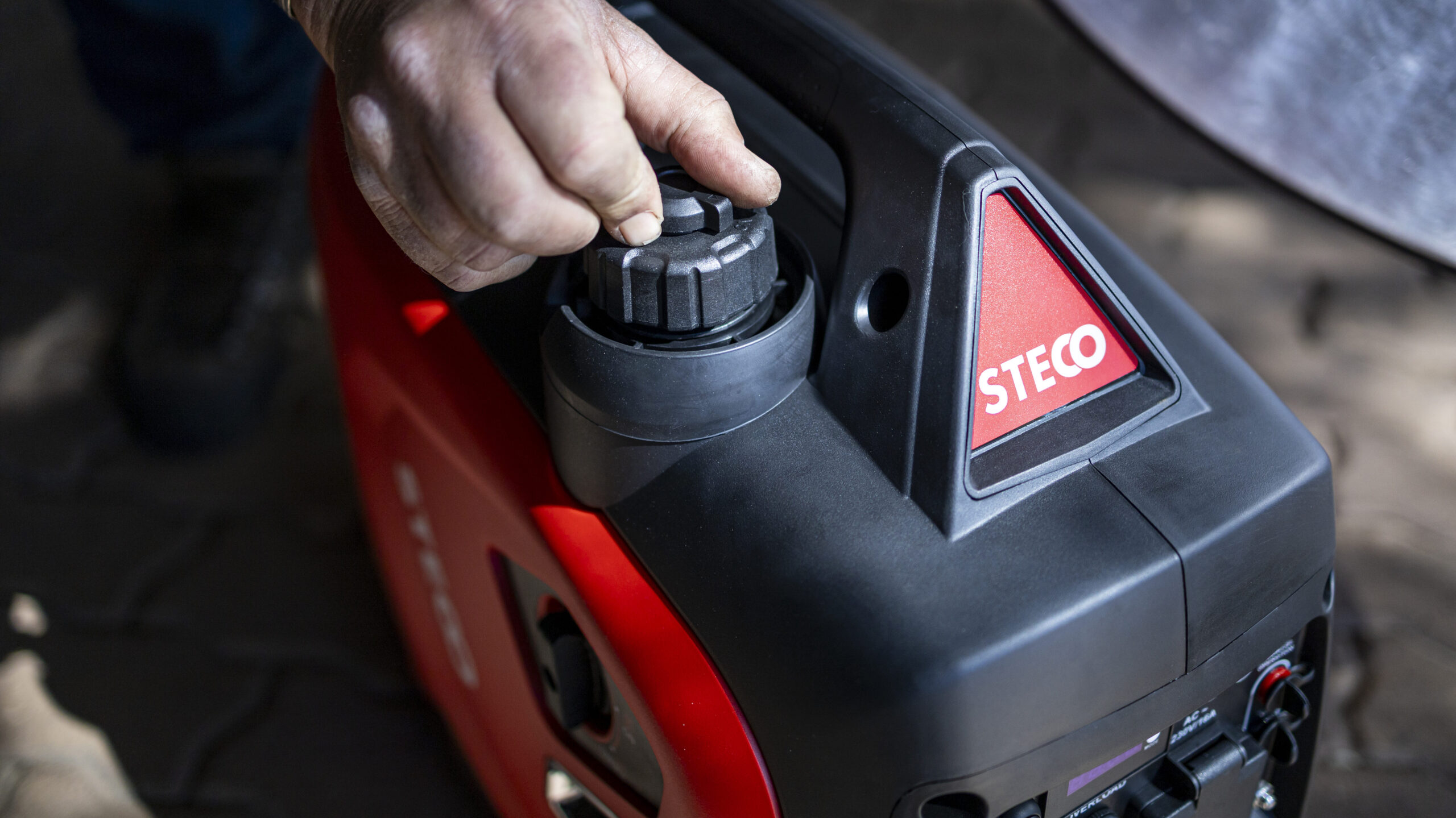
Practical Ways to Reduce Generator Fuel Consumption
1. Master Your Load Management
Generators are designed to operate within a specific “sweet spot.” Running a generator continuously at full capacity places unnecessary strain on the engine and increases fuel consumption. On the other hand, operating a generator below roughly 30% of its rated load can lead to wet stacking, where unburned fuel accumulates in the exhaust system, reducing efficiency and potentially damaging the engine over time.
Expert Tip: Aim to operate your generator between 50% and 75% of its rated capacity. This is where most generators achieve their best balance between power output and fuel economy.
Choosing the right generator is just as important as how you operate it. Selecting a generator that’s too small can overload the engine, while an oversized generator may consume more fuel than necessary when powering light loads.
- For home backup, camping and recreational use, compact inverter generators such as the SG-2050I, SG-2052I and SG-3250I provide reliable, fuel-efficient power for essential appliances and smaller electrical equipment.
- For workshops, contractors and everyday trade applications, models like the SG-2800, SG-3300io and SG-4000I offer a balance of power, portability and efficiency, making them well suited to running multiple power tools and equipment.
- For demanding construction sites, agricultural operations and larger backup power requirements, high-capacity petrol generators including the SG-6900K, SG-7900K and SG-8500A are designed to deliver the sustained output needed for heavier electrical loads.
2. Never Skip Preventative Maintenance
Think of your generator like a delivery vehicle. If the tyres are underinflated and the engine oil is overdue for replacement, the vehicle must work harder to reach its destination. The same principle applies to generators. Dirty air filters, contaminated fuel filters, worn spark plugs and degraded engine oil all reduce combustion efficiency and increase fuel consumption.
Expert Tip: Follow the recommended service intervals for your generator. Regularly replace the engine oil, spark plugs, air filters and fuel filters to keep the engine operating at peak efficiency. A well-maintained engine breathes better, burns fuel more efficiently and delivers more reliable performance over its lifetime.
3. Optimize Ventilation and Operating Temperature
Generators naturally produce a significant amount of heat during operation. If the unit is installed in a confined space or exposed to direct sunlight without adequate airflow, the cooling system must work harder to regulate engine temperature. Increased engine temperatures often lead to reduced fuel efficiency.
Expert Tip: Always position your generator in a well-ventilated location with adequate clearance around the unit. Whenever possible, operate it in a shaded area while ensuring all ventilation openings remain unobstructed.
If noise levels are also a concern, Steco’s closed-frame inverter generators, including the SG-2050I, SG-3250I, SG-4000I and SG-7502I, combine quieter operation with excellent fuel efficiency, making them ideal for residential, recreational and light commercial applications.
4. Sequence Your Start-Ups
When the power goes out, it’s tempting to switch everything back on immediately. Unfortunately, doing so creates a sudden surge in electrical demand, forcing the generator to rapidly increase engine speed and fuel consumption to meet the load.
Expert Tip: Start your highest-demand equipment first, allow the generator to stabilize, and then gradually power the remaining appliances and tools.
For applications where power demand changes throughout the day, inverter generators automatically adjust engine speed to match the required electrical load. This helps reduce unnecessary fuel consumption during lighter operating periods while maintaining stable power output.
Safety First: Efficiency Without Compromise
Trying to save fuel should never put your team or equipment at risk.
- Never modify the governor: The governor controls the engine speed to maintain a steady voltage. Tinkering with it to “save fuel” can lead to voltage drops that will permanently fry your connected power tools.
- Beware of exhaust fumes: When optimizing your generator’s placement for cooling, ensure the exhaust is still pointing far away from open doors, windows, or intake vents. Carbon monoxide buildup is silent and deadly.
- Let it cool before refuelling: A hot exhaust manifold and a splash of petrol is a recipe for disaster. Always shut the generator down and let it cool for at least 15 minutes before topping up the tank.
For users who require greater fuel flexibility, Steco’s SG-5000DFi Dual Fuel Inverter Generator offers the convenience of operating on either petrol or LPG, giving you more options depending on fuel availability and operating requirements.
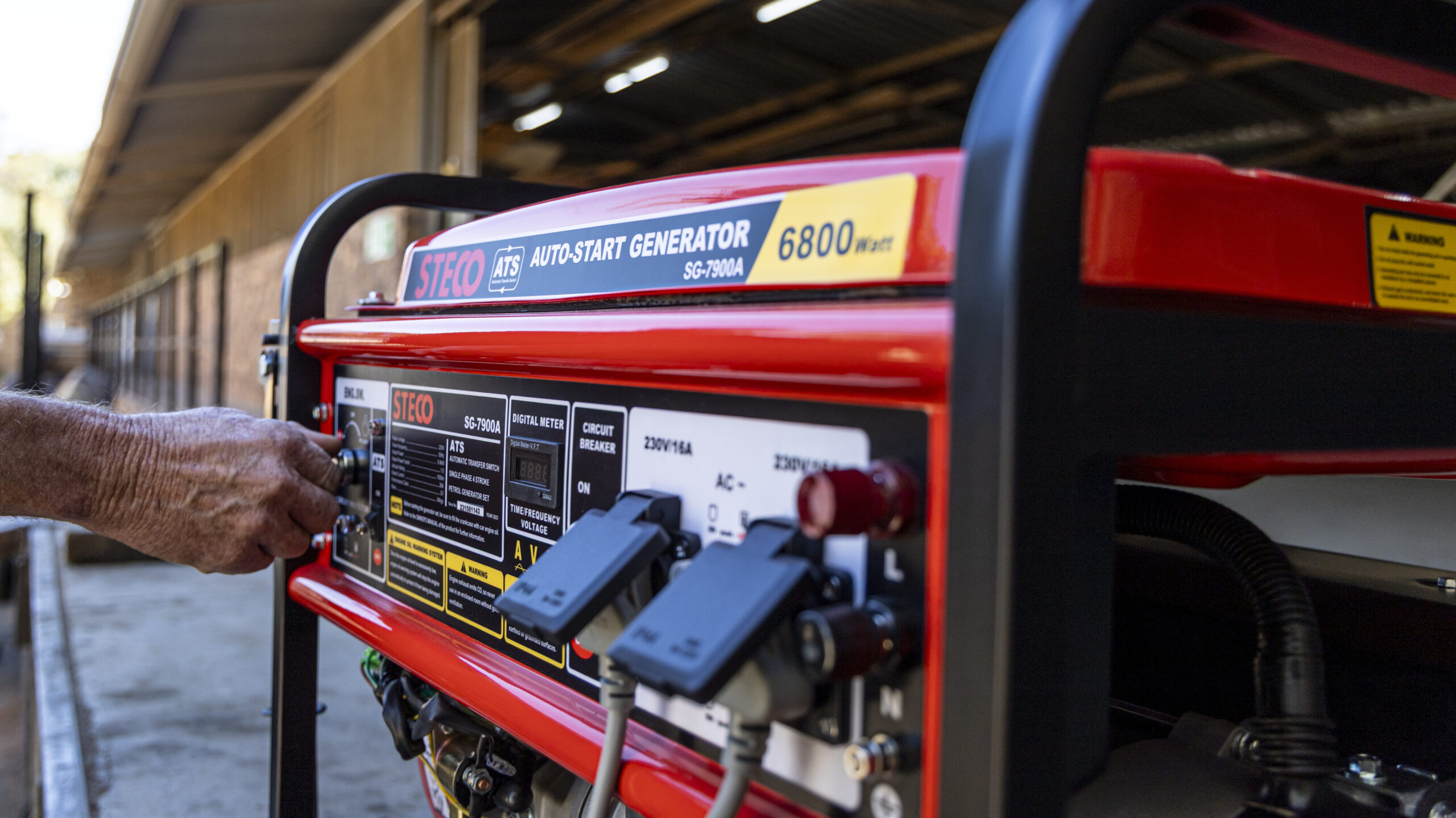
Powering Forward with Steco
A generator is more than a backup power source – it’s an investment in productivity, reliability and peace of mind. While proper load management, regular maintenance and smart operating practices will significantly reduce fuel consumption, choosing the right generator for your application is equally important.
Whether you need a compact inverter generator for home backup, a powerful petrol generator for demanding construction work, or the flexibility of a dual-fuel solution, Steco offers a generator designed to match your power requirements while helping you keep operating costs under control.
Every Steco generator is backed by a comprehensive 2-year guarantee. When it’s time for scheduled servicing, our network of service centres provides expert support and genuine parts to help keep your generator operating at peak performance for years to come.